With the maths
What is the minimum I can spend?
The floor is roughly ten dollars. But “possible” and “sensible” are two different questions, and what sits between them is fixed costs. This works through the arithmetic rather than asserting a number.
Step: Before you start
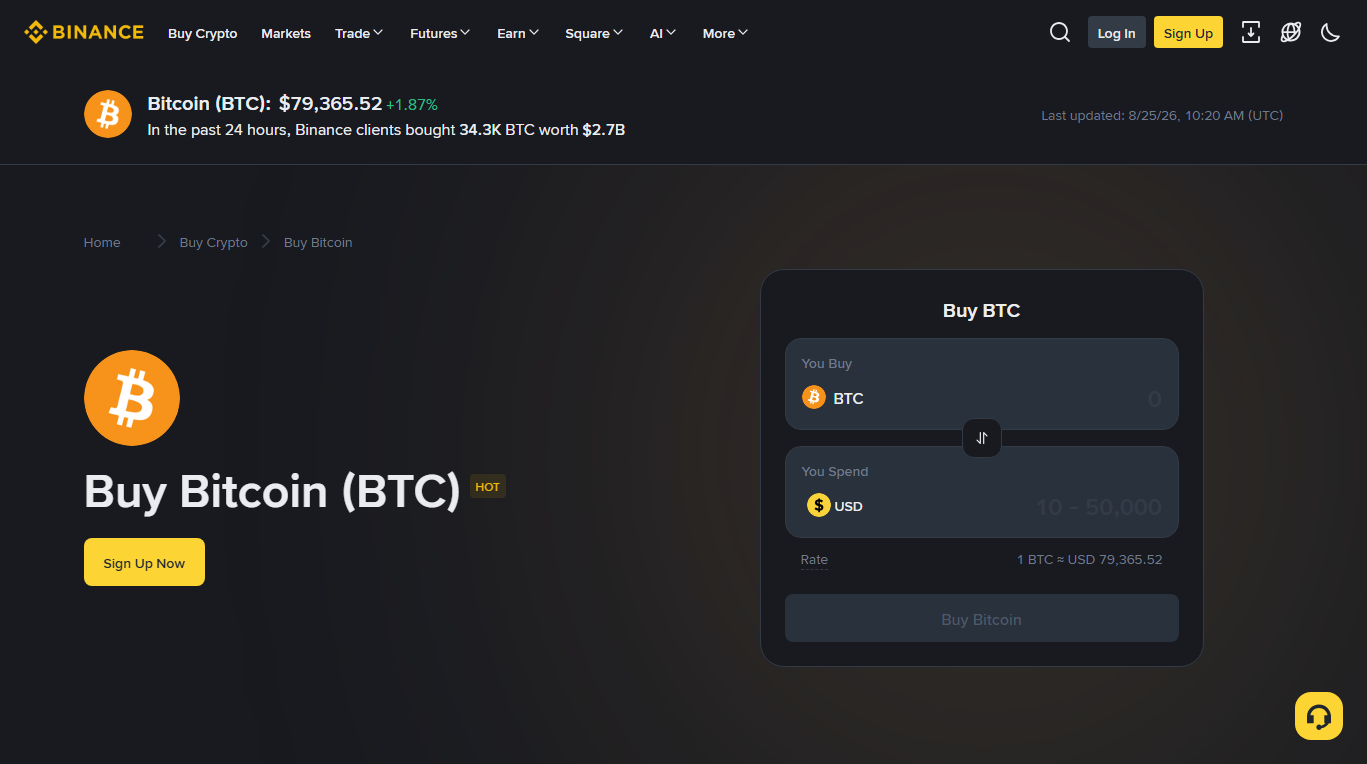
Platform minimums are typically around ten dollars equivalent, varying by market and payment method. Below that the order will simply be rejected.
But that number answers “what will the system accept”, which is probably not what you are actually asking.
Two different questions#
“What is the minimum” usually means one of two things, and they have different answers:
| What you mean | Answer |
|---|---|
| What will the platform accept? | Around ten dollars equivalent. A hard floor set by the platform |
| Below what does it stop making sense? | Depends entirely on whether you plan to withdraw. This is the question worth answering |
Fixed costs versus proportional costs#
This distinction is the whole answer, so it is worth stating clearly.
- Proportional costs take the same percentage whatever the size. The trading fee is one. A percentage-based funding fee is another. Buy ten dollars or ten thousand and they take the same share.
- Fixed costs take the same amount whatever the size. The network withdrawal fee is the main one. It does not care whether you are moving twenty dollars or twenty thousand.
A proportional cost cannot make a small purchase disproportionately bad — it is the same percentage either way.
A fixed cost absolutely can. The same flat fee that is a rounding error on a large amount can be a large fraction of a small one.
A worked example#
Take an amount of 100 units of your local currency, and follow it down three different routes. The numbers below are illustrative orders of magnitude, not quotes — real rates change constantly.
Route A: local bank transfer, spot order, leave it on the platform
- Funding: free on most instant domestic rails.
- Trading: a fraction of a percent — call it 0.1, so about 0.10.
- Withdrawal: none, you are not withdrawing.
Total cost: roughly 0.1%. At 100, that is about ten cents. There is nothing wrong with this at all, and it would be identical at 10,000.
Route B: card purchase via one-click buy, leave it on the platform
- Funding and trade combined: the markup inside the quote, commonly 1–2%.
- Withdrawal: none.
Total cost: roughly 2%. At 100, about two units. More expensive, but still proportional — the percentage is the same at any size.
Route C: same as A, but withdraw to your own wallet immediately
- Funding and trade: about 0.1% as in route A.
- Withdrawal: a fixed network fee. Suppose it is 5.
Total cost: about 5.1 on a purchase of 100 — over 5%. Put 1,000 through the identical route and the same fixed 5 becomes about 0.6%. Put 10,000 through and it is 0.05%.
| You put in | A: transfer + spot, no withdrawal | B: one-click, no withdrawal | C: transfer + spot + withdrawal |
|---|---|---|---|
| 100 | ~0.1% | ~2% | ~5% |
| 500 | ~0.1% | ~2% | ~1.1% |
| 1,000 | ~0.1% | ~2% | ~0.6% |
| 10,000 | ~0.1% | ~2% | ~0.05% |
Read that table by column rather than by row. Columns A and B do not move at all — they are flat because they are proportional. Only column C changes, and it changes dramatically. That single fixed fee is the entire reason small amounts can look bad.
The practical rule#
-
If you are not withdrawing, small is fine
A hundred units through a fee-free funding route costs you a fraction of a percent. The claim that buying small is not worth it does not survive the arithmetic.
-
If you are withdrawing, do it less often, not less at a time
Accumulate to an amount where the fixed fee is an acceptable percentage, then withdraw once. Withdrawing small amounts repeatedly is what actually costs you.
-
For a genuine first purchase, small is the right choice anyway
The point of the first one is to prove the whole path works end to end. Paying 2% on a small amount to validate the route is a reasonable price for that.
Common questions#
Is the minimum the same everywhere?
No. It varies by platform, by market and by payment method — card purchases often have a higher floor than spot orders. Your screen will tell you the applicable minimum.
My order was rejected as below minimum. What now?
Either raise the amount, or switch method — a spot order typically has a lower floor than a one-click card purchase.
Should I buy a lot at once to save on fees?
Fee efficiency is a poor reason to commit more than you intended. The proportional costs are identical at any size, so the only saving is on a fixed withdrawal fee — and sending a large amount down an untested path is a well-established way to get stuck.
How much should I actually put in?
We will not answer that, and you should be cautious of anyone who will. The only constraint this site states is that it should be an amount you could lose entirely without it changing your life.
Last updated: 25 August 2026. All figures above are illustrative orders of magnitude to show how the arithmetic behaves, not quotes — real rates and network fees change constantly. Go by what your screen shows. Not investment advice.
Related
- What do the fees actually come to? The three layers in detail
- Can I buy just 0.001 bitcoin? Why you do not need a whole one
- Getting money in Which funding route costs least